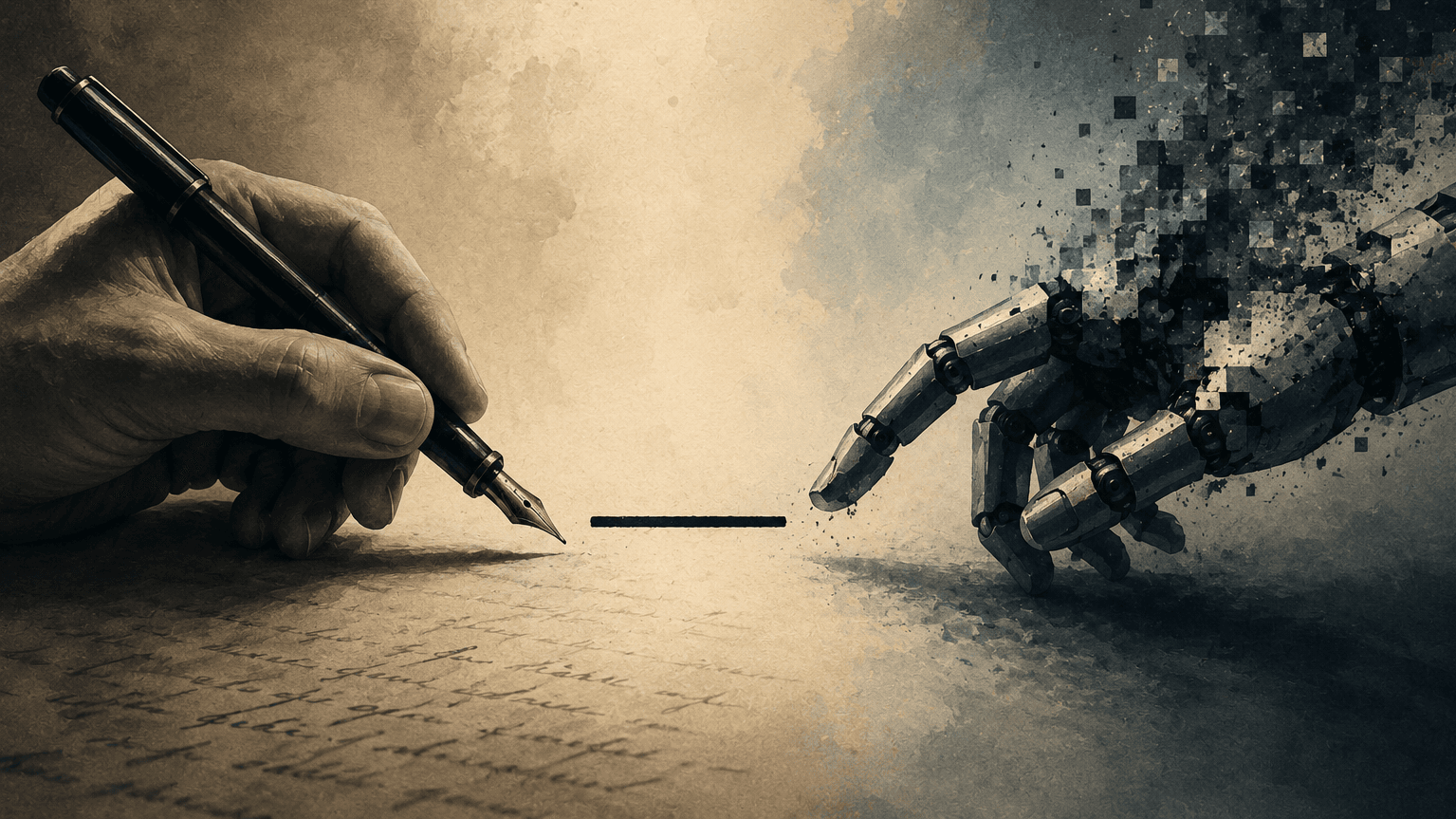
Every new tool that touched creative work arrived carrying the same fear, that it would replace the person using it. AI is the newest of them, and the most capable, and the answer is close to what it has always been, with one complication worth being honest about.
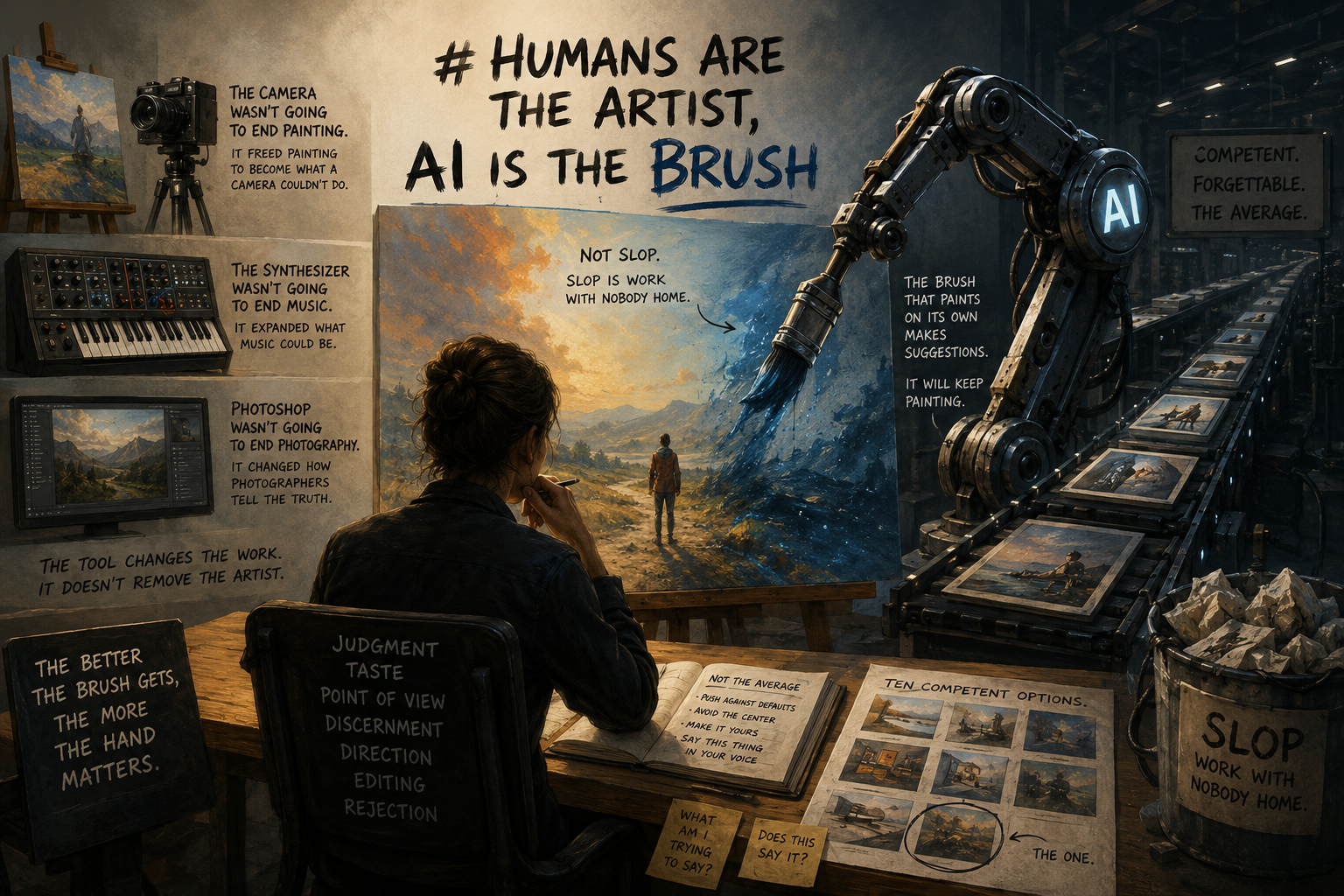
The idea that AI is a brush and not the artist can sound like reassurance, the kind of thing you say to calm a worried room. We think it is something better than reassurance, because it happens to be true, and because the same thing has been true every time a new tool arrived in creative work. The camera was going to end painting. The synthesizer was going to end music. Photoshop was going to end photography. In each case the tool did change the work, sometimes drastically, but it changed what the artist did rather than removing the artist from the picture. The camera, by handling literal representation better than any painter could manage by hand, freed painting to become something a camera could not do at all. The pattern is old enough by now that we should probably trust it.
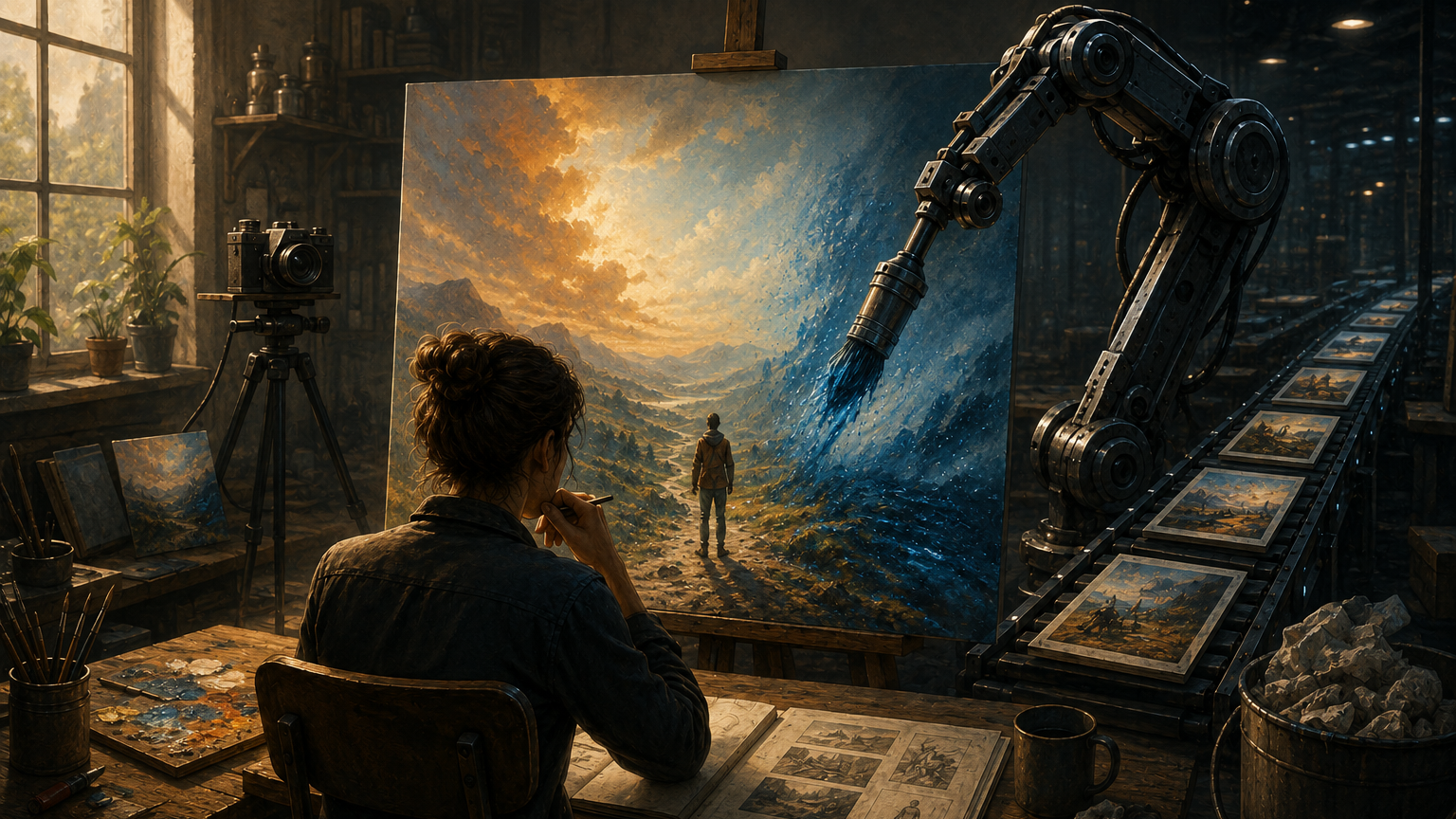
Still, it would be dishonest to pretend nothing is different this time, because one thing genuinely is. Every earlier tool was inert. A brush did nothing at all until a hand picked it up and moved it. AI does not wait to be moved. You ask it for something and it produces a complete, competent answer on its own, with its own defaults and its own quiet sense of what a reasonable result looks like. This is the part of the metaphor that needs updating, because the brush now makes suggestions, and it will happily go on painting whether or not anyone is really directing it. A brush that paints on its own can produce work with no one behind it, and that, more than anything, is what people are reacting to when they complain about slop. Slop is not quite the same as bad work. It is work with nobody home.
What this changes is where the value in the work actually sits. When producing something took real effort, effort was where the value lived, and simply being able to make the thing at all was most of the job. When producing something becomes nearly free, the making is no longer the scarce part. The scarce part is judgment: knowing which of the ten competent options in front of you is actually good, knowing what to keep and what to discard, knowing what you were trying to say in the first place and whether what you are looking at says it. The artist's work moves away from production and toward discernment, toward editing and directing and rejecting, toward holding a point of view definite enough to bend a general-purpose tool in a specific direction.
The trap, and we watch people fall into it constantly, is letting the tool's defaults quietly become your voice. Any model has a center of gravity, a most likely output, an average of everything it has ever been shown. If you do not push against that average, the average is exactly what you get, and the average is always competent and almost always forgettable. It is the writing that sounds like every other piece of writing, the design that looks like every other design, the faint sameness that people are already learning to notice and mistrust. The artist is the force that pulls the work off that average and toward something that could only have come from this particular person, with this particular taste, trying to say this particular thing. Remove that force and the tool drifts back to the middle on its own, and the middle is precisely where slop lives.
So the honest conclusion is not the comforting one, that humans are special and need not worry. It is more demanding than that. The brush became extraordinarily good, which has raised both the floor and the ceiling of what a single person can make, and that is worth being genuinely excited about rather than precious over. But the same capability makes it easier than it has ever been to produce a great deal of work with no one home, and to mistake that work for the real thing. The better the brush gets, the more the hand matters, because the tool can now do almost everything except decide what is worth making and judge whether the result is any good. That decision was always the art. It still is.
This is the conviction underneath how we work at Esaias and Company. We use these tools constantly and without apology, because refusing a good tool is not a principle, it is just vanity in a nicer outfit. But we treat them as instruments in the service of a point of view, never as a replacement for having one. The work that leaves our hands is meant to look like it came from somewhere, and from someone, because it did. As the tools keep getting better, that is the difference we intend to keep paying attention to, since it is the one that was ever really worth anything.