
AI output has one quality it always possesses, whether or not it is any good: it sounds confident and reads well. That is exactly what makes judging it harder than it looks, and why learning to judge it well is becoming one of the more valuable skills a person can have.
To tell whether AI output is good, judge it against your actual intent and against the facts, not against how polished it sounds. These systems produce fluent, confident, well-formatted writing by default, which means surface quality tells you almost nothing about whether the content is accurate, complete, relevant, or substantive. The real skill is learning to look past the polish and deliberately check the things the polish tends to hide.
This is the third part of a natural sequence. If you want the groundwork, What Is Prompt Engineering explains the skill and How to Write a Good Prompt covers the input. This piece is about judging what comes back out.
Why good-sounding and good are not the same thing
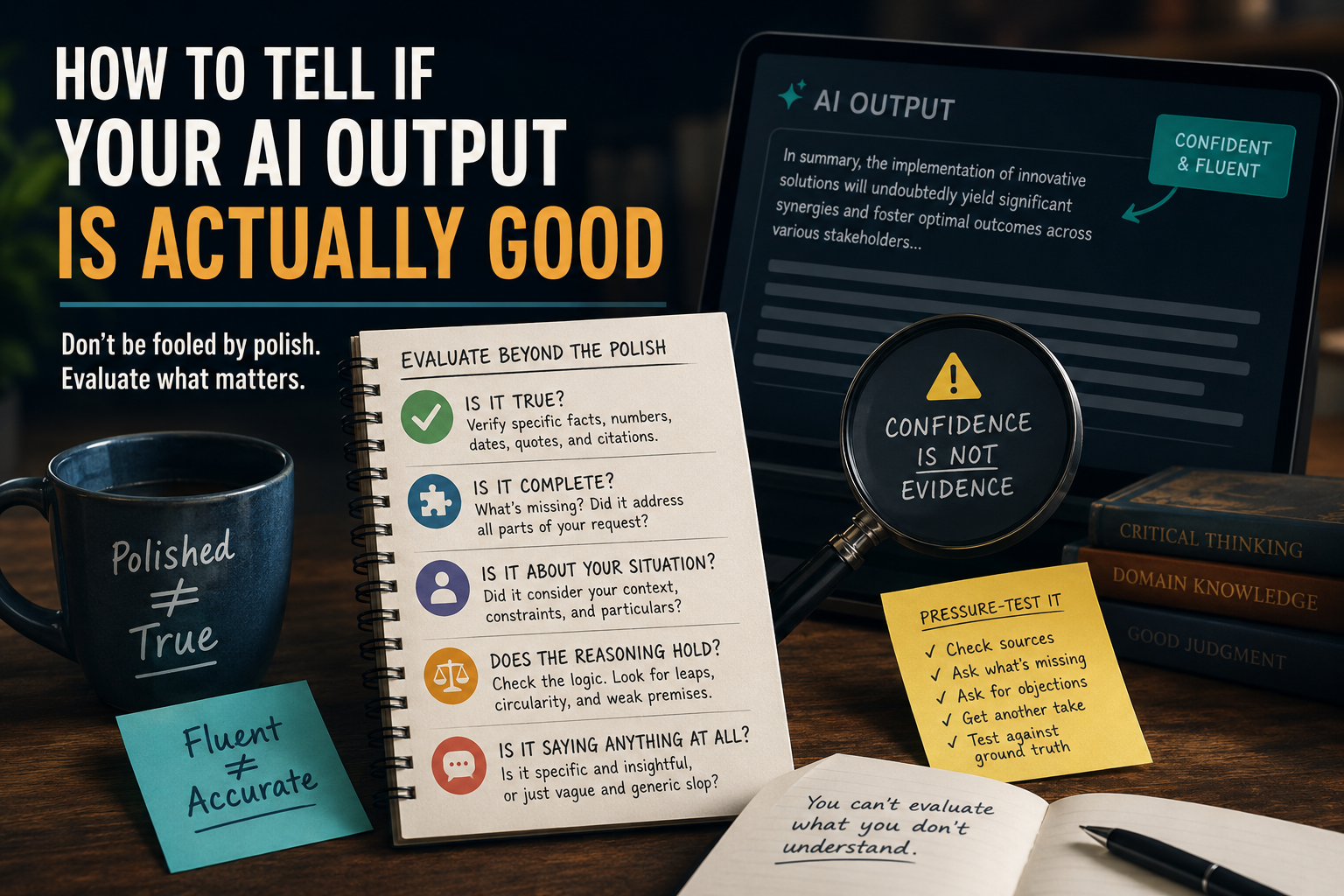
The single most important thing to understand about evaluating AI output is that fluency and quality are unrelated. A model writes in clean, confident, grammatical prose regardless of whether what it is saying is true, complete, or relevant to you. Polish is the one thing it always delivers, so polish is the one signal you must learn to ignore.
This matters because the polish is not neutral. It actively disarms scrutiny. A confident, well-organized answer invites you to accept it, and a subtly wrong answer that reads beautifully is far more dangerous than an obviously clumsy one, because nothing about its surface warns you to slow down. The instinct to trust well-written text served us well for most of history, when producing well-written text required understanding the subject. That correlation has now been broken, and evaluating AI output is largely the work of training yourself out of the old instinct.
What to actually check
Once you stop grading on polish, a handful of concrete questions do most of the work.
Is it true?
Check the specific, falsifiable claims, especially names, numbers, dates, quotes, and citations, because these are where models invent most confidently. A useful habit is to verify two or three concrete facts in any output that matters. If those check out, your confidence in the rest rises. If even one is fabricated, treat the whole thing as suspect, since a model that invented one detail will have invented others with equal smoothness.
Is it complete?
Fluent text hides its omissions perfectly, because what is missing leaves no visible gap. Ask yourself what a genuine expert would expect to see that is not here, which constraint from your request quietly went unaddressed, and whether the hard part of the question was actually answered or politely skipped. Incompleteness is the most common failure in answers that otherwise look excellent.
Is it actually about your situation?
A model will happily answer the generic version of your question rather than your specific one, and the generic answer often reads as perfectly competent. Check that it engaged with your actual context, your constraints, and your particulars, rather than producing the reasonable-sounding average response that would fit anyone who asked something similar.
Does the reasoning hold?
When an output includes an explanation or an argument, read the logic on its own terms rather than trusting it because the conclusion sounds right. Plausible-sounding reasoning can be circular, can rest on an invented premise, or can leap over the step that actually mattered. The confidence of the prose is not evidence that the logic underneath it is sound.
Is it saying anything at all?
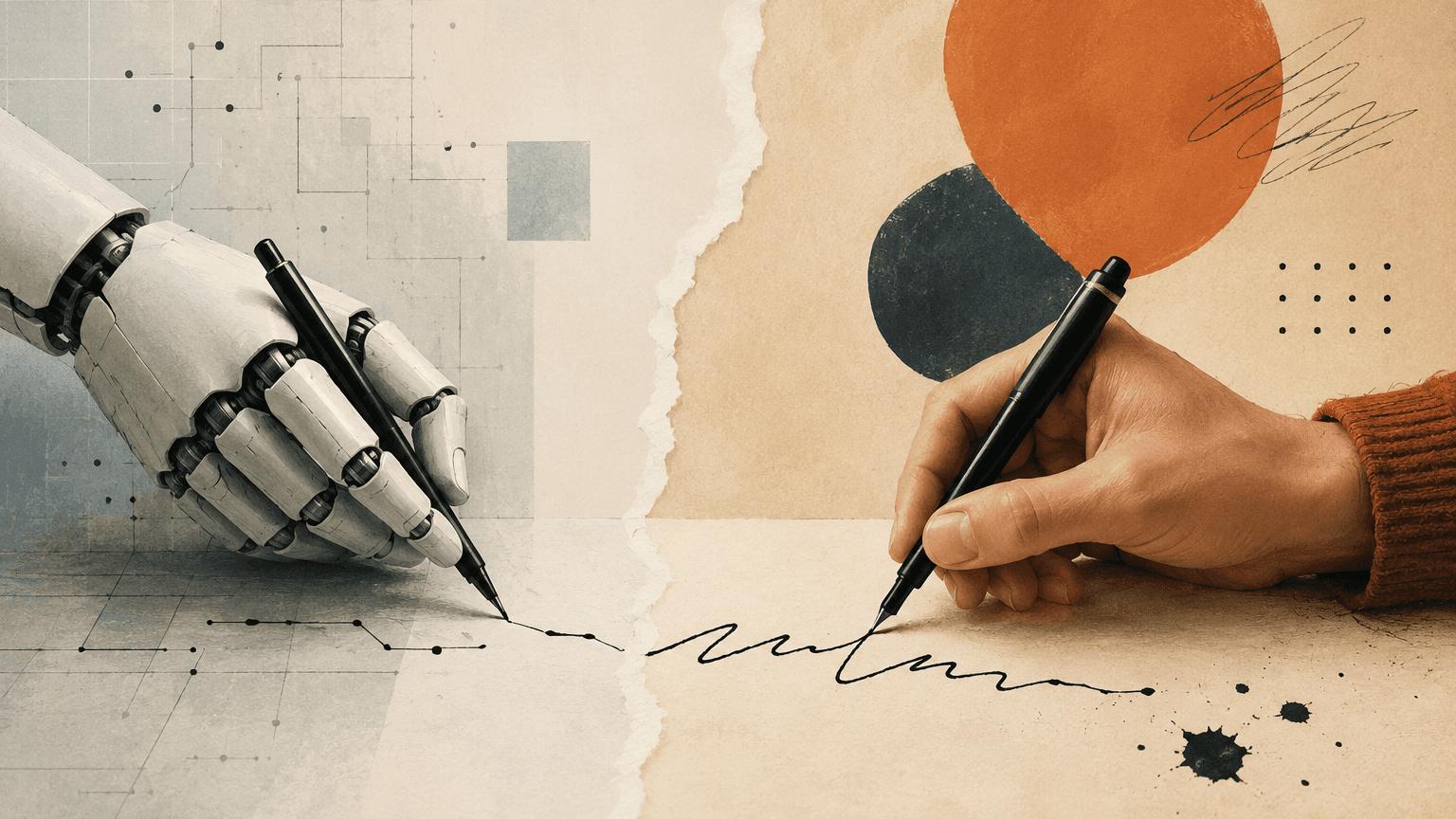
Some output passes every factual check and is still worthless, because it is vague, hedged, padded, and characterless, the fluent average of everything ever written on the topic. This is slop, and recognizing it is its own skill, which we explore in Humans Are the Artist, AI Is the Brush. Ask whether the output makes a specific, committed point you could not have guessed, or whether it merely arranges agreeable words around the subject without ever landing on anything.
Practical ways to pressure-test output
Beyond reading critically, a few active techniques surface problems quickly. You can ask the model to show its reasoning or cite its sources and then actually check them, which often exposes invented support. You can ask it directly what it left out, what it is least confident about, or what the strongest objection to its answer would be, which tends to reveal the soft spots a polished draft was papering over. You can generate the answer twice, or ask for two genuinely different approaches, and watch what stays stable versus what shifts, since invented details tend not to survive a second pass. And wherever ground truth exists, you can test against it directly, by running the code, checking the figure, or confirming the claim at its source, rather than relying on the output to grade itself.
The limit worth respecting
All of this rests on an uncomfortable truth: you cannot reliably evaluate what you do not understand. Every technique above depends on you knowing enough about the subject to notice when something is off. In a domain you know well, AI becomes a genuine accelerant, because your judgment is intact and the model simply does the producing. In a domain you do not know, the same fluency that helps an expert can quietly mislead a novice, because there is no internal check to catch the confident error. This is the same danger we describe with code in How to Vibe Code Like a Senior Engineer, where leaning too hard on the model produces a great deal of output and very little understanding. The honest implication is that the more you intend to rely on AI in an area, the more, not less, you need to actually understand it.
Why this matters for a business
For any organization putting these tools to work, evaluation is not a nicety, it is the control that separates useful AI from a liability. Fluent, wrong output that ships unchecked does not announce itself as a mistake. It looks finished, it reads well, and it reaches a customer or a decision before anyone notices the error underneath the polish. The teams that get real value from AI are the ones that treat verification as a standing habit rather than an occasional afterthought, and that keep enough human expertise in the loop to judge what the machine produces. The model is rarely the weak point. The willingness to check it is.
Frequently asked questions
How can I tell if AI-generated content is accurate? Verify the specific, checkable claims, particularly names, numbers, dates, quotes, and citations, since these are where models fabricate most confidently. If two or three concrete facts hold up, your confidence in the rest can rise, but if even one is invented, treat the whole output as suspect.
Why does bad AI output still sound so convincing? Because these models produce fluent, confident writing by default, regardless of whether the content is correct. Polish is the one quality they always deliver, so a wrong answer can read just as smoothly as a right one, which is exactly why surface quality is not a reliable signal.
What is the difference between fluent output and good output? Fluent output reads well. Good output is accurate, complete, relevant to your specific situation, soundly reasoned, and actually substantive. A piece of writing can be entirely fluent and still be wrong, generic, or empty, so the two should be judged separately.
How do I check AI output in a subject I do not know well? This is the hardest case, because you lack the knowledge to catch confident errors. Lean on verifiable sources, ask the model for citations and check them independently, seek a second opinion from someone who does know the subject, and treat the output as a starting draft to verify rather than a finished answer to trust.
What is AI slop? Slop is output that is fluent and even factually fine but vague, padded, and characterless, the average of everything written on a topic with no specific or committed point. Detecting it means asking whether the content actually says something you could not have guessed, rather than simply arranging agreeable words around the subject.