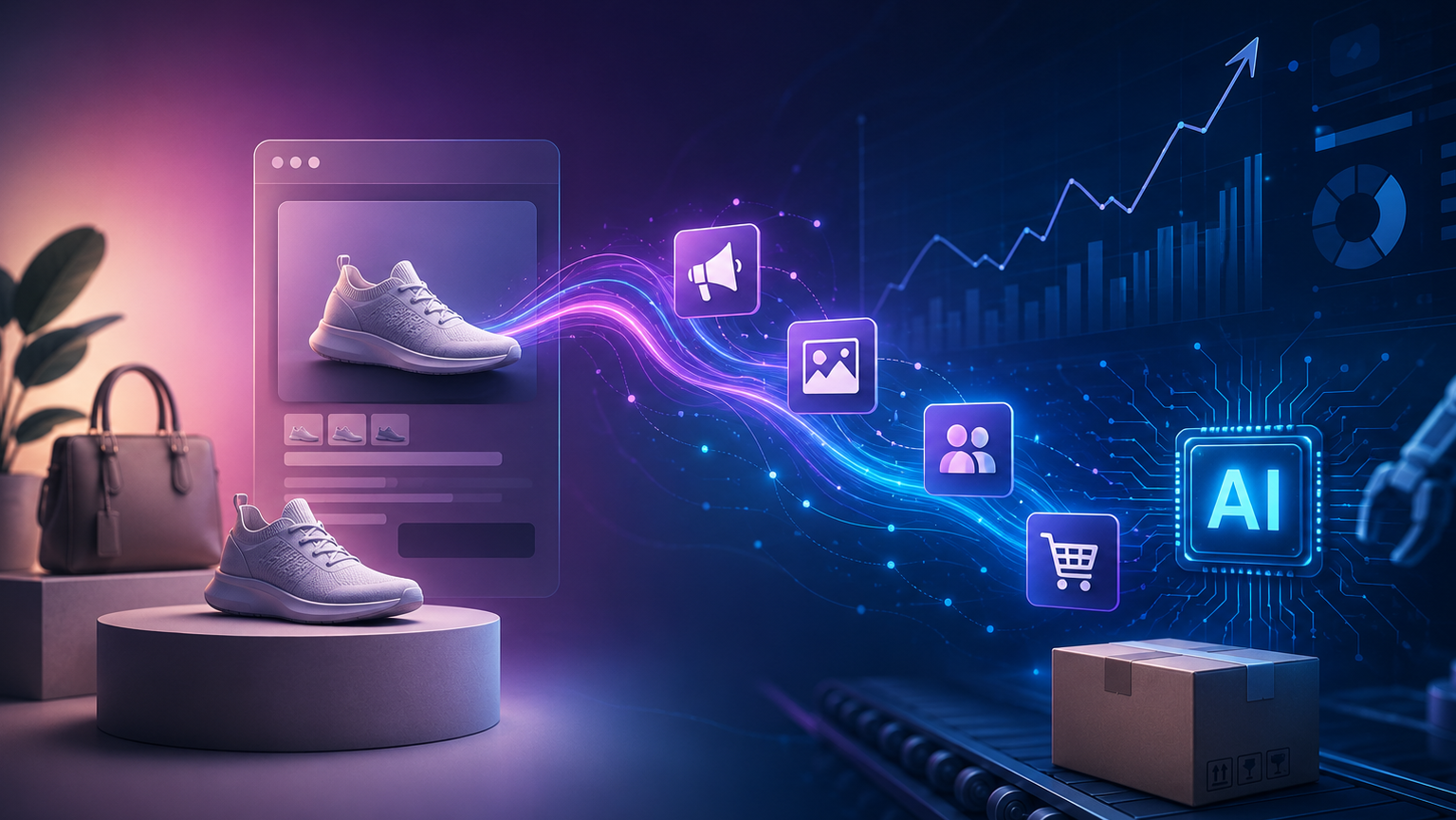
Selling used to mean keeping a store running. Now it means using AI to sharpen every part of the business behind that store, from the first ad someone sees to the way the whole operation is run.
Selling better with AI means applying it across the entire business rather than only at the storefront. The largest gains come from using it to do work that was once too slow or too expensive to do well at every step: producing and improving product imagery, creating and testing ad creative, running constant experiments, holding quality high, managing brand and social presence, and streamlining the operations behind all of it. The mindset that unlocks this is simple to state and harder to live: selling is no longer about maintaining a store, it is about continuously optimizing every process the business runs on. And because the tools themselves change constantly, staying current is part of the skill rather than a thing you do once.
Selling is no longer maintaining a store
For a long time, running a store meant keeping the shelves stocked, the site online, and the orders going out the door. Those things still matter, but they are no longer where competitions are won, because they are the baseline everyone can now meet. What has changed is the ambition. Nearly every function that touches a sale can now be measured, tested, and improved continuously, often by a small team or even one capable person, where it used to require specialists and budgets most businesses did not have. The question has shifted from whether the store is running to how well every part of it is optimized, and the businesses pulling ahead are the ones that understood selling itself has quietly become an optimization problem rather than a maintenance one.
Where AI changes the work
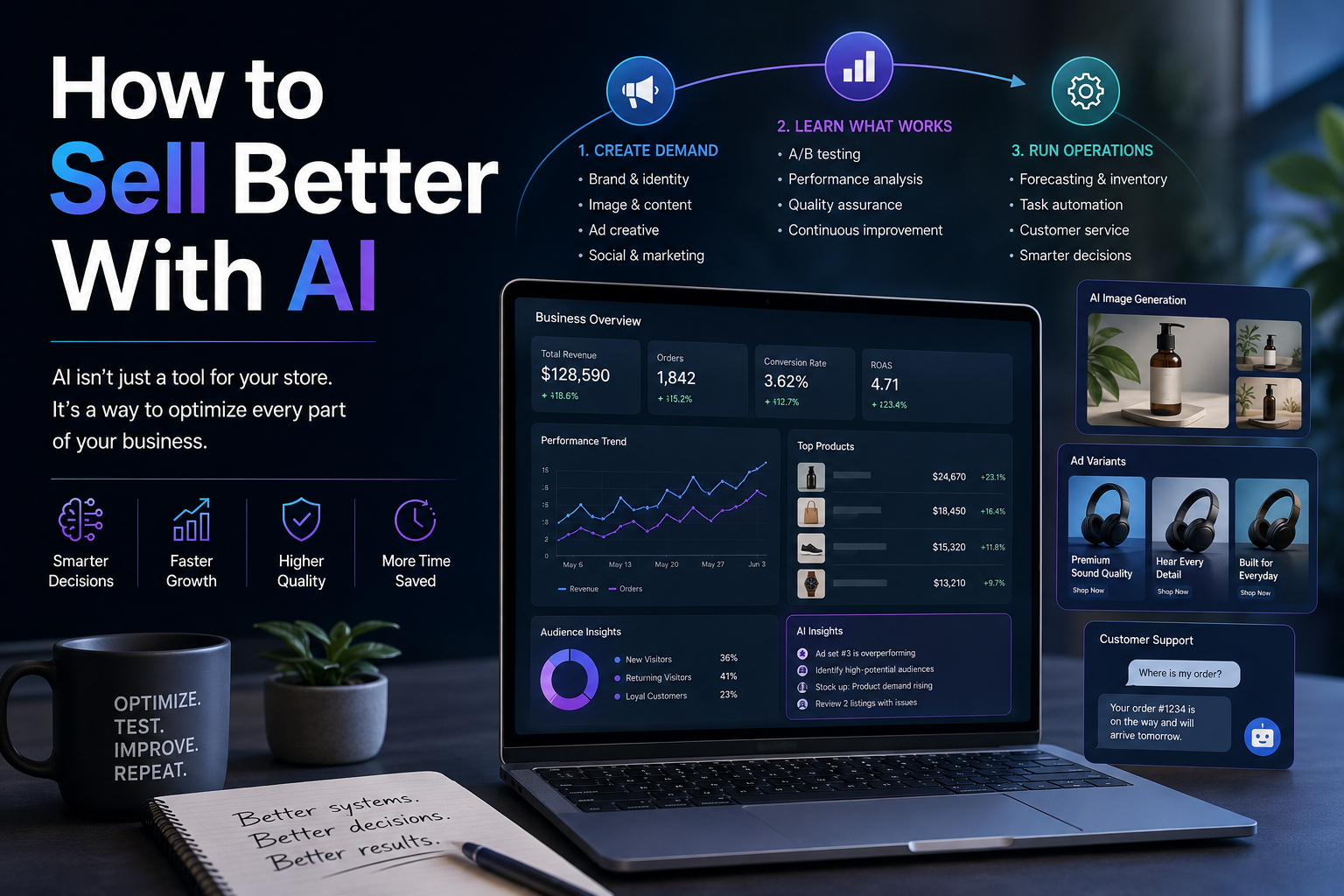
It helps to think about the business in three movements, because AI now reaches into all of them.
The first is creating demand, the front of the business where people first encounter you. This is where brand identity lives, and AI can help develop and hold a consistent visual and verbal identity across every channel, as long as it serves a real point of view rather than replacing one. It is where image processing has changed the economics most visibly, since the studio-grade product photography, background work, variant shots, and lifestyle imagery that once cost real money and time can now be produced and refined quickly, letting a small business look as polished as a large one. It is where ad creation has been transformed, because you can generate and iterate on copy and visuals fast enough to tailor creative to different audiences and platforms instead of running one tired version everywhere. And it runs straight through social media and marketing, where content can be produced, adapted per platform, segmented, and personalized at a scale that used to be out of reach, a topic we go deeper on in How to Optimize Your Social Presence for AI.
The second movement is learning what works, which is where the real compounding happens. A/B testing used to be something businesses did occasionally because each test was costly to set up and slow to read. AI changes both ends of that, making it cheap to generate the variants and fast to analyze the results, which means you can test continuously rather than now and then, and small improvements stack into large ones over time. Sitting alongside that is quality assurance and control, where AI can monitor for errors, check listings and content for consistency across channels, flag problems before customers find them, and hold a standard at a scale a human team could not watch by hand. Together these turn the business into something that learns and corrects itself far faster than it used to.
The third movement is running the operation, the back of the business that customers never see but always feel. Management and operations benefit from AI in forecasting demand, watching inventory, summarizing what is happening across the business, supporting decisions, and automating the routine workflows that quietly eat a team's hours. Customer service can lean on AI to handle the common, repetitive questions well, which frees people to spend their attention on the difficult cases where a human genuinely matters. None of this is glamorous, and that is rather the point, because the unglamorous parts are where most businesses leak time and money, and where AI quietly returns the most.
The real skill is staying current
There is a catch that determines whether any of this lasts, and it is worth stating plainly. These tools change constantly. A model or a feature that was clearly the best choice six months ago is routinely surpassed, and entirely new capabilities appear on a schedule that does not slow down. This means selling better with AI is not a setup you complete and then forget. It is an ongoing practice of paying attention, re-evaluating what you use, and being willing to change your tools when something genuinely better arrives. The businesses that win treat that fluency as a core competency rather than a one-time project.
The discipline cuts both ways, though, and judgment is what holds the middle. Chasing every shiny new thing is its own trap, a way to stay perpetually busy switching tools instead of selling, while refusing to ever update leaves you running on yesterday's advantages until they quietly become disadvantages. The skill is not adopting everything or nothing, but developing a sense for which changes actually matter to your business and acting on those.
Optimizing is not the same as abdicating
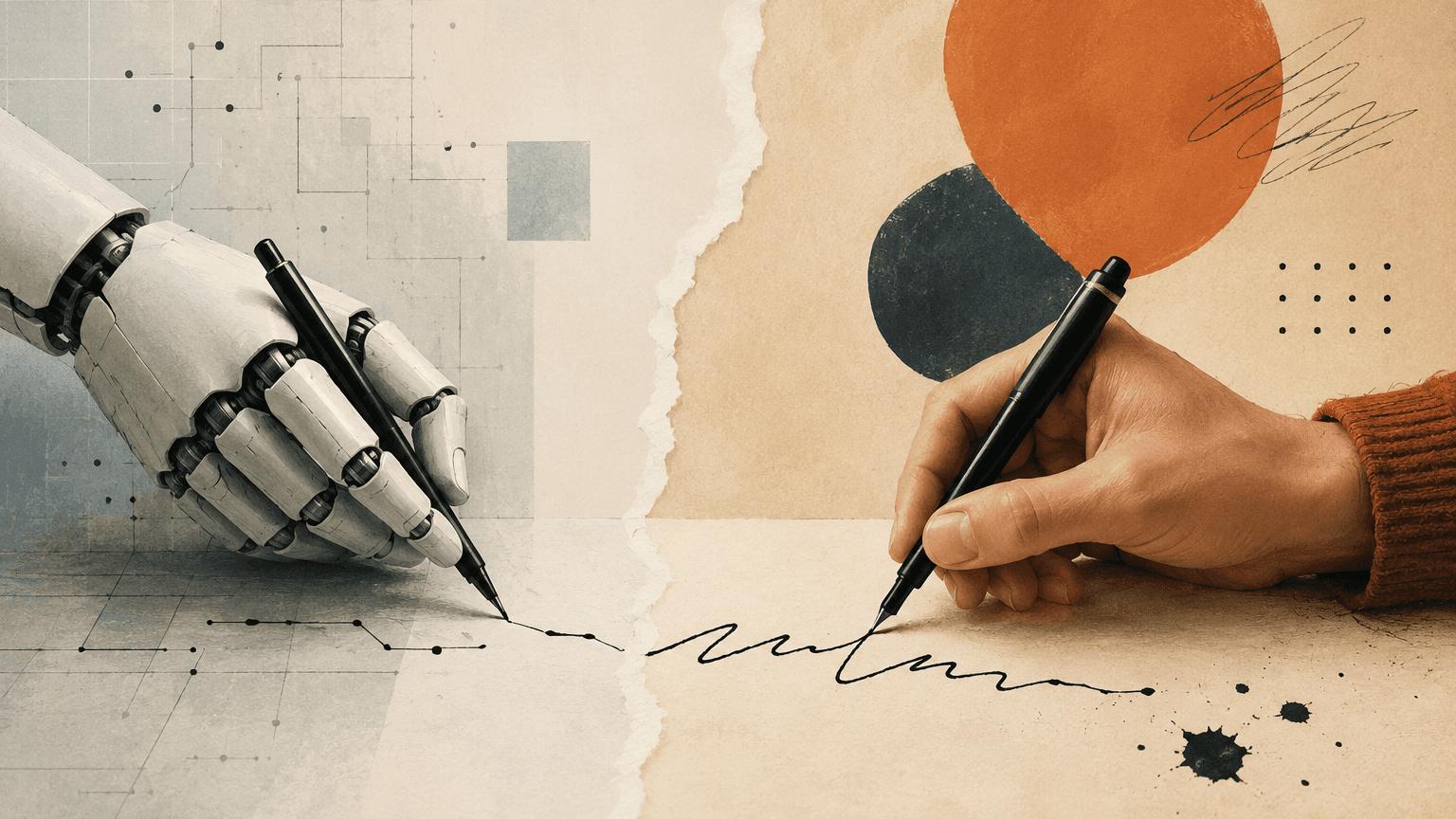
One caution runs underneath all of it. Using AI to optimize every part of the business does not mean handing every part over to it. The point of view, the brand's taste, the standard for what is good enough, and the decision about what is worth doing at all still come from people. A business that automates those away does not become more competitive, it optimizes itself straight into the average, which is the product-level version of the problem we describe in What Is AI Slop, and How to Avoid It. The goal of all this tooling is leverage, more reach and more precision for the human judgment behind the business, not a replacement for that judgment.
This is the daily work of our Digital Identity Division at Esaias and Company, and it is exactly the kind of full-business optimization that took a boutique like Angel Skin Solutions from fifteen orders a month to more than fifty a week, a story we tell in Ezequiel Ureña's profile. The product did not change. Everything around the product did.
Frequently asked questions
How can AI help me sell more? By improving every function that touches a sale rather than just the storefront. That includes producing and refining product images, creating and testing ad creative, running continuous A/B tests, maintaining quality across channels, managing brand and social presence, and streamlining operations, all of which add up to a business that is optimized end to end.
Is selling with AI just about the online store? No. The biggest gains come from treating selling as the optimization of the whole business and its processes, from marketing and brand identity through testing and quality control to management and customer service, rather than only maintaining the store itself.
What parts of a business can AI improve for selling? Common areas include image processing and product photography, ad creation, social media and marketing, A/B testing and analytics, quality assurance, brand identity, customer service, and operational management such as forecasting and inventory.
Why does keeping up with new AI tools matter for selling? Because the tools change quickly, and a choice that was best months ago is often surpassed. Selling well with AI is an ongoing practice of re-evaluating and updating your tools, with judgment about which changes genuinely matter, rather than a one-time setup.
Does using AI to sell mean removing the human element? No. AI is most effective as leverage for human judgment, not a replacement for it. The point of view, taste, and quality standards that make a business distinctive still come from people, and businesses that automate those away tend to optimize themselves into forgettable averageness.